
RBI has pegged the GVA growth of 7.6 per cent for the current fiscal and 7.9 per cent the year after
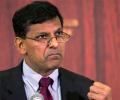
But this might not be the best time to enter these, as probability of further reductions in near future is low
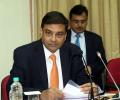
Relations between the Mint Road and North Block have often been frosty, with the former's calls for lowering rates being the biggest point of difference

As if wanting to be an antidote to the coronavirus pandemic, the Indian stock market adorned carnival robes in 2021 with a tsunami of liquidity unleashed by global central banks coupled with supportive domestic policies and the world's largest vaccination drive sparking off a world-beating rally on Dalal Street, despite bouts of uneasiness over fizzy valuations. While the wider economy shuttled between recovery and relapse, dictated by multiple mutations of the virus, equity market benchmarks appeared headed in just one direction -- skywards. The dizzying upward journey has added a whopping Rs 72 lakh crore during 2021 to investors' wealth, measured as the cumulative value of all listed shares in the country, taking it to nearly Rs 260 lakh crore.

The Indian economy is expected to grow around 10 per cent during the current financial year on the likelihood of fewer COVID-19-linked supply disruptions and buoyancy in the global economy, said Poonam Gupta, director general of economic think-tank NCAER. The real challenge, however, would be to sustain a growth rate of 7-8 per cent in years to come, she said. "We could see annual growth in the ballpark range of about 10 per cent. "The reasons for this perceived optimism are: fewer supply disruptions; increased pent-up demand in the traditional and contact-intensive services; and a buoyant global economy.

Rajan also said the outlook for agriculture is subdued, in view of both rabi and kharif prospects being hit by monsoon vagaries.

The Indian Met Department has predicted a below normal monsoon.

Rajan said that even though inflation has breached the 6 per cent mark as against the RBI target of getting it down to 5 per cent by March 2017, the price rise scenario will ebb in future
There is a near consensus that at least a 25 basis points cut, if not 50, can be expected in the June policy.

Hawkish tone likely to guard rupee from further slide

Hopes of revival and earnings growth in 2020, surprise tax cuts, and robust foreign flows - thanks to easy global monetary policies - are a few reasons why the markets have managed to digest the low GDP footprint. Select bluechips such as Reliance Industries, Bajaj Finance, Asian Paints, and ICICI Bank have gained sharply this year. On the other hand, YES Bank, Zee Entertainment, and Indiabulls Housing have seen a sharp fall.

From its March 2020 low, Bitcoin has gained a massive 474 per cent and has surged 214 per cent year-to-date.

Indian rupee is likely to test 76-76.50 levels as a relatively strong greenback, boiling crude prices and COVID headwinds deepen the depreciation bias for the domestic currency, according to experts. One of the significantly-hit Asian currency in recent months amid uncertain economic times, rupee is expected to see a consolidation in the vicinity of the current level before being pulled towards the depreciation bias. While the equity market has been surging with occasional blips, the rupee has mostly been weak against the US dollar in recent months.
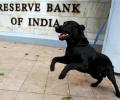
Rajan drew attention towards the Nachiket Mor committee on PSL and said that the RBI is trying to make the entire process more effective.


SBI Chairperson Arundhati Bhattacharya said any rate cut by the bank would depend on a lot many factors.

Equity benchmarks mustered gains for the first time this week on Thursday as investors piled into the recently-battered metal, bank and IT stocks amid expiry of monthly derivative contracts. Snapping its three-session losing streak, the 30-share BSE Sensex rallied 503.27 points or 0.94 per cent to settle at 54,252.53. On similar lines, the broader NSE Nifty gained 144.35 points or 0.90 per cent to end at 16,170.15.
In the broader markets, the BSE Midcap and Smallcap indices extended gains and were up over 1% each

With inflation figures expected to be well within RBI's target, there may be room for further rate cut.

The internals of the food inflation are worrying, given a broad-based uptick across categories that tend to be sticky, such as proteins, and a narrower-than-expected reduction in inflation for vegetables.

'The market movement will be largely driven by earnings growth.'

There is merit in considering whether merchandise exports can be facilitated by halting if not reversing the rupee's appreciation, says T N Ninan.
Governor's statements will be weighed to gauge confidence level.

The resignation is sure to create more political firestorms for the government as it comes on the eve of the winter session of Parliament where the Opposition has already made it clear to the treasury benches that infringing on the RBI autonomy would be a big talking point for them.

It can be noted that the rupee lost nearly 7 per cent since the beginning of May as FIIs have pulled out nearly $4 billion from the domestic debt, as bond yields fell on expectation of RBI cutting rates on Monday.
Experts disagree with the idea and the Reserve Bank of India (RBI), which has the sole right to print money, is not comfortable with it as well.

New businesses have been secured from the public and private sectors, as well as domestic and international markets.

'In the overall global portfolio, India's weighting has come down in the past seven months.'

If you are buying a bond to cater to your regular income needs, check the interest distribution schedule.

A rate cut will bring positive sentiment around the Budget.
Seeking to dispel possible notions of the RBI not having done enough by opting for a pause for the second consecutive time, Das said the RBI has a wide dashboard of instruments beyond rates that can be deployed.

Forex dealers said apart from month-end demand for the American currency from importers, dollar's gains against other currencies overseas amid US data showing more-than-expected economic growth in the second quarter also put pressure on the local unit.
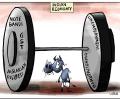
'Course correction today would be good politics and also good economics,' notes T N Ninan.

NITI Aayog vice chairperson Rajiv Kumar tells Indivjal Dhasmana that additional funds could be generated through divestment, and that the fiscal deficit should be widened while focusing on the revenue deficit.

The regulator typically meets overseas investors in the US and UK in the first half of a financial year, and had opted for a virtual meet last year too.

Markets shrugged off RBI's neutral stance on key policy rates.

The stronger than expected monsoon has not yet softened food inflation as much as it should have and in particular, vegetable prices have been impacted by weather-driven supply disruptions, said RBI Governor D Subbarao while unveiling the first quarter monetary policy review.

A likely easing in inflationary pressures in the forthcoming months will reopen the window for the RBI to once again prioritise growth and ease its interest rates.
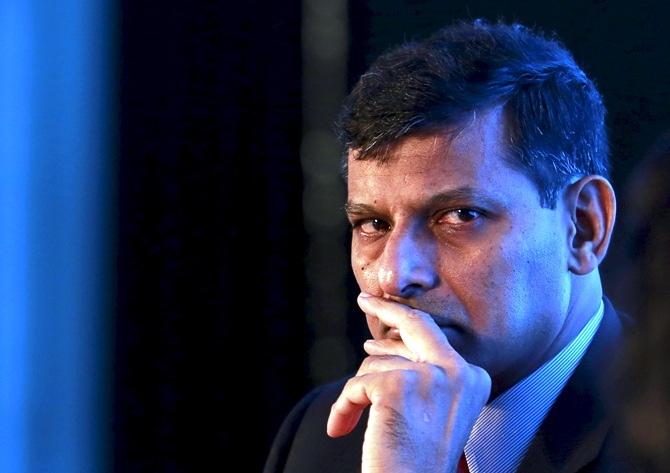
'Rajan brought in a healthy air of competition in the banking sector.'

The surge in oil prices has also affected the rupee, which hit a 6-week low of 70.25 on Friday against the dollar.
